

The holidays pack schedules, social duties, travel and financial decisions into a narrow window, and many people notice their sleep suffers as a direct result. This guide explains how holiday stressors disrupt sleep through physiological pathways like cortisol elevation and sympathetic nervous system activation, then shows which mattresses and bedroom upgrades reliably lower arousal and restore deeper rest. You will learn how to match mattress types and specific features to your sleep position and stress profile, which quick bedroom improvements yield the biggest relief, and which hygiene habits protect melatonin and circadian timing during busy weeks. The article covers four focused sections: why holiday stress disrupts sleep and simple management; mattress types that reduce pressure and awakenings; bedroom upgrades that lower environmental triggers; and practical holiday-tailored sleep hygiene tips. Read on for science-linked recommendations, concise purchase guidance for helpful sleep products, and checklists you can use before guests arrive or travel begins.
Why Does Holiday Stress Disrupt Your Sleep and How Can You Manage It?
Holiday stress produces cognitive and physiological responses that interfere with sleep by increasing cortisol and sympathetic nervous system arousal, which delays sleep onset and fragments restorative stages. When planning or social obligations push bedtime later, circadian cues shift and melatonin timing can be suppressed by late light exposure and stimulants, worsening insomnia symptoms. Managing these effects means reducing physiological arousal through short, evidence-informed behaviors and environmental fixes that lower sensory input and promote parasympathetic activation. The strategies that follow blend behavioral planning with targeted bedroom adjustments so you can reduce bedtime activation without giving up seasonal activities. These approaches directly prepare the ground for selecting mattresses and upgrades that address stress-linked sleep problems.
What Are the Main Causes of Holiday Stress Affecting Sleep?
Holiday stressors commonly include financial pressure, social obligations and travel-related schedule disruption, each of which creates predictable sleep challenges. Financial worries activate rumination that raises evening cortisol levels and delays sleep onset, while hosting or late-night social events shift routines and reduce total sleep opportunity. Travel and jet lag change light exposure and sleep timing, fragmenting sleep architecture and reducing deep sleep. Recognizing which of these stressors dominates your holidays helps prioritize countermeasures like budgeting routines, guest-prep checklists, and strategic light exposure to stabilize bedtime.
Stress and Sleep Regulation: Impact on Autonomic and HPA Systems The impact a myriad of stress-linked physiological systems, such as sleep regulation, the autonomic nervous system, and the hypothalamic-pituitary-adrenal (HPA) axis. Stress can disrupt sleep through multiple pathways, including increased arousal, rumination, and changes in sleep architecture. This can lead to difficulty falling asleep, staying asleep, and experiencing non-restorative sleep.
The impact of stress on sleep: pathogenic sleep reactivity as a vulnerability to insomnia and circadian disorders, DA Kalmbach, 2018
How Does Stress Physiology Impact Your Sleep Quality During the Holidays?
Stress physiology links perceived threats and busy schedules to measurable sleep effects: cortisol elevation impairs the transition into sleep, sympathetic nervous system activation increases arousals, and late-night screens suppress melatonin production. This biological cascade shortens slow-wave and REM sleep, producing daytime fatigue and mood shifts that further undermine sleep quality. Recent research indicates that simple relaxation routines and light management can blunt these responses and improve sleep continuity. Reducing evening arousal with behavioral and environmental interventions lowers the physiological barrier to deep sleep and sets up the mattress and bedroom to support recovery.
Stress, HPA Axis, and Sleep Disorder Mechanisms Activation of the HPA and/or the sympathetic nervous systems results in wakefulness and these hormones including corticotropin-releasing hormone (CRH), adrenocorticotropic hormone (ACTH), cortisol or corticosterone, noradrenaline, and adrenaline, are associated with attention and arousal. Stress-related insomnia leads to a vicious circle by activating the HPA system. An awareness of the close interaction between sleep and stress systems is emerging and the hypothalamu
Stress and sleep disorder, I Shim, 2012
What Are the Best Mattresses for Stress Relief and Improved Holiday Sleep?
Choosing a mattress that reduces pressure points and temperature-related awakenings helps the nervous system downshift more effectively at night, producing longer uninterrupted sleep periods. Key mattress categories—memory foam, latex, and hybrid—each address different mechanisms: pressure relief, cooling/response, and balanced support respectively, so pick by primary sleep complaint rather than brand alone. Look for mattresses with cooling layers, pressure-relieving comfort foam, and good motion isolation to prevent partner disturbances; pairing these features with a supportive base reduces physical pain-related arousals. Below is a concise comparison of mattress types and attributes to guide quick holiday purchases before seasonal disruptions.
| Mattress Type | Primary Attribute | Best For |
|---|---|---|
| Memory foam | Pressure relief & motion isolation | Side sleepers, partner disturbance |
| Latex | Responsiveness & cooler sleep | Hot sleepers, durability seekers |
| Hybrid | Zoned support & airflow | Combination sleepers, back support |
This table highlights how matching mattress type to sleep position and thermal needs reduces stress-related awakenings and supports recovery; next are quick, practical buying signals to prioritize.
Which Mattress Types Offer the Best Pressure Relief and Comfort?
Memory foam provides deep pressure relief by conforming to body contours, which reduces nociceptive stimuli that can trigger night awakenings and sympathetic spikes. Latex responds more quickly and tends to run cooler, lowering heat-induced arousals while still offering cushioning for pressure points. Hybrid designs combine coil support with comfort layers to balance spinal alignment and breathability, making them a solid choice for combination sleepers who switch positions. Considering your primary complaint—pressure pain, overheating, or motion disturbance—will point you to the most suitable mattress family.
What Mattress Features Should You Look for to Reduce Holiday Sleep Disruption?
Seek cooling materials (gel-infused foam, breathable covers) to avoid overheating that fragments sleep, and choose pressure-relieving comfort layers to reduce pain-related arousals. Motion isolation is essential if partner movement wakes you, and zoned support or appropriate firmness helps maintain spinal alignment for uninterrupted rest. Buying signals include generous trial periods and warranties and clear holiday-season return policies to reduce decision anxiety and allow risk-free testing during a busy period. Prioritizing these features helps you select a mattress that directly mitigates stress-related sleep disturbances.
How Can Bedroom Upgrades Create a Relaxing Sleep Environment for the Holidays?
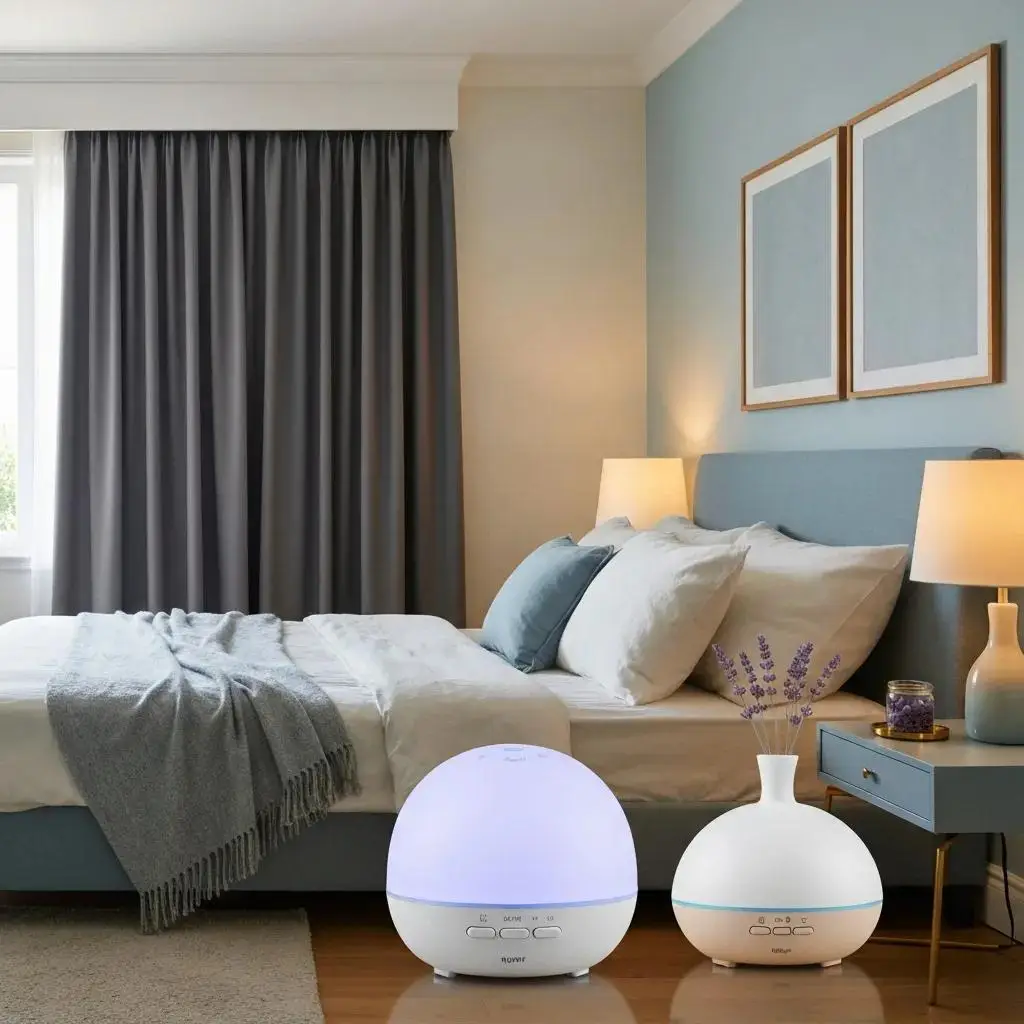
Small, targeted bedroom upgrades reduce environmental triggers that amplify stress physiology and make it easier to fall and stay asleep during holiday upheaval. Light control, sound masking, calming scent cues and tactile comfort all lower arousal and cue the brain that sleep is safe and permitted. Investing strategically in a few high-impact items produces outsized benefits: darker rooms deepen melatonin release, steady background sound cuts abrupt awakenings, and comfortable moisture-wicking bedding eases temperature regulation. The short table below compares common upgrades by impact and ease of implementation to help you prioritize purchases before holiday hosting or travel.
| Upgrade | Impact on Sleep | Ease of Installation |
|---|---|---|
| Blackout curtains | Increases melatonin by blocking light | Easy (hang rods) |
| Sound machine | Masks disruptive noises and provides steady-state masking | Very easy (plug-in) |
| Essential oil diffuser | Provides calming olfactory cue (use lavender) | Easy (fill & run) |
The table clarifies trade-offs so you can pick quick wins that reduce environmental arousal; the following list outlines specific accessories and pairing suggestions.
What Bedroom Accessories Help Reduce Stress and Promote Relaxation?
Key accessories—blackout curtains, sound machines, diffusers and breathable bedding—each send sensory signals that calm the nervous system before bed. Blackout curtains or a sleep mask lower evening light exposure to protect melatonin, while a compact sound machine provides consistent masking of street or house noises that would otherwise trigger micro-awakenings. An essential oil diffuser with calming blends and soft, moisture-wicking sheets create tactile and olfactory cues associated with rest. Pairing one sensory control (darkness) with one comfort upgrade (bedding or pillow) gives a rapid, low-effort improvement in sleep quality.
How Does Smart Sleep Technology Enhance Your Holiday Sleep Quality?
Smart lighting and basic sleep-tracking wearables help stabilize circadian timing by delivering morning bright-light cues and evening dimming schedules that anchor sleep across irregular holiday days. Programmed wake-up lights and smart bulbs that reduce blue spectrum in the evening protect melatonin production and ease morning wakefulness when travel or late events push schedules. Simple wearable sleep trackers and companion apps provide feedback that reduces sleep anxiety by turning subjective worry into actionable metrics. Used sparingly, these technologies support behavior change without creating new sources of nighttime arousal.
Sleep Deprivation, Circadian Disruption, and Allostatic Load “Getting a good night’s sleep” seems a panacea for improving mood and cognition. These subjective impressions are supported by countless studies exploring impacts of sleep (and sleep loss) on mental health, metabolism, and immune function. Similarly, being “out of phase” with local time, commonly experienced by shift workers of jetlagged air travelers, demonstrates that there are both neural and physiologic effects of internal circadian (daily) time being misaligned with external environmental time. This chapter reviews these areas contextualized using the model of allostasis and allostatic load that emphasizes the impact of this “wear and tear” on the brain and body. Sleep deprivation and circadian disruption: stress, allostasis, and allostatic load, IN Karatsoreos, 2015
What Simple Holiday Sleep Hygiene Tips Can Help You Sleep Better Despite Stress?
Effective holiday sleep hygiene blends consistent timing, diet adjustments and a digital wind-down to protect sleep biology from situational stressors. Keep wake and sleep times within a 60-minute window to preserve circadian entrainment, avoid heavy meals and alcohol close to bedtime to prevent fragmented REM and slow-wave sleep, and enact a 60–90 minute pre-sleep routine that excludes screens to maintain melatonin release. Small purchases can accelerate these habits—consider a cooling pillow, a thin mattress topper for pressure relief, or a blackout sleep mask to fast-track environment control. These combined changes reduce physiological arousal and let your mattress and bedroom upgrades do their restorative work.
| Actionable Item | Purpose | Quick Result |
|---|---|---|
| Sleep mask | Blocks residual light | Immediate low-cost darkness |
| Mattress topper | Adds pressure relief | Faster comfort and fewer awakenings |
| Cooling pillow | Lowers head/neck heat | Reduced wakefulness from overheating |
The item-action table helps prioritize affordable aids that complement behavioral changes; next are concrete scheduling and dietary tactics to implement now.
How Can You Establish a Consistent Sleep Schedule During the Holidays?
Anchor sleep around a prioritized “core” sleep window by designating consistent wake time and bedtime boundaries even when social events vary, using morning light exposure to reset circadian phase. Time-blocking helps: commit to a latest allowable bedtime and plan activities earlier in the evening when possible to protect sleep opportunity. Short, strategic naps (20–30 minutes) can restore alertness without undermining nighttime sleep if timed before mid-afternoon. These tactics reduce cumulative sleep debt and blunt stress-driven arousal that otherwise amplifies insomnia.
What Dietary and Digital Detox Practices Improve Holiday Sleep?
Avoid alcohol and heavy, fatty meals within two to three hours of bedtime because they fragment slow-wave and REM sleep and raise nighttime sympathetic tone. Limit caffeine intake to earlier in the day and replace late-night screen time with low-arousal rituals—reading, light stretching or a warm shower—to support melatonin onset. Use blue-light mitigation by dimming screens or using warm-spectrum lighting in the evening to preserve melatonin production. These dietary and digital controls lower physiological activation, improving the effectiveness of mattress and bedroom interventions that follow.
Conclusion
Improving your sleep during the holiday season is achievable through strategic mattress choices and thoughtful bedroom upgrades that address stress-related disruptions. By understanding the physiological impacts of holiday stress and implementing effective sleep hygiene practices, you can enhance your overall rest and well-being. Explore our curated selection of mattresses and sleep accessories designed to create a calming sleep environment. Take the first step towards better sleep today and transform your holiday experience.