
Most mattress advice still mixes folklore with fragments of legitimate science, which leads shoppers to choose the wrong surface for their body and sleep goals. This article cuts through common mattress myths with evidence-based explanations of firmness, material performance, cooling technologies, lifespan, and price-versus-value trade-offs so you can make better decisions. Readers will learn how firmness differs from support, why modern memory foams often sleep cooler than older generations, realistic lifespan expectations by material, and what features genuinely justify higher prices. The following sections walk through spinal alignment and firmness science, cooling technology mechanisms in memory foam, material lifespans with practical replacement signals, and a clear pricing checklist to find real value. Throughout, we integrate practical buying guidance aligned with a vendor-neutral product-discovery approach so you can move from understanding to confident purchase decisions without marketing fluff. Recent studies and contemporary material science are used where relevant to explain mechanics and outcomes for sleep quality and back pain.
Is a Firm Mattress Always Better for Your Back? Understanding the Firm Mattress Myth
A firm mattress is not automatically better for back health because firmness and support are different properties: firmness describes surface feel while support refers to the mattress’s ability to keep the spine neutral. Good support comes from a stable support core paired with a comfort layer that allows pressure relief at shoulders and hips, which reduces pressure points and preserves spinal alignment. Recent research and biomechanical reasoning indicate that medium-firm surfaces often balance contouring and support for many sleepers, improving pressure distribution without excessive sinking. Understanding this distinction helps shoppers prioritize targeted support and zoned construction rather than buying by the label “firm,” which is often inconsistent across brands.
What Does Science Say About Mattress Firmness and Spinal Alignment?
Scientific studies and biomechanical tests show that spinal alignment depends on both contouring and resistance: an adequate support core resists collapse while the comfort layer lets bony prominences settle. Trials comparing firmness levels frequently find medium-firm mattresses improve pain-related outcomes for average-weight adults by distributing pressure and maintaining neutral lumbar curvature. The mechanism is simple: the comfort layer relieves localized pressure where needed, while the support core maintains overall height and alignment under heavier regions of the body. Translating this evidence into a mattress selection means seeking construction details (comfort-layer materials and support-core robustness) rather than relying solely on subjective “firm” labels.
Research indicates that a medium-firm mattress can significantly improve spinal alignment and reduce pain.
Mattress Firmness and Spinal Alignment for Pain Reduction We found that a mattress of medium firmness reduced pain and improved the ability of mattresses to maintain good spinal alignment during sleep. The study also examined the effects of mattress firmness on the lumbar spine and the method used to evaluate spinal alignment.
How Should You Choose Mattress Firmness Based on Sleep Position and Body Type?
Choosing firmness should reflect sleep position and body weight because different combinations demand distinct pressure relief and support levels to keep the spine neutral and reduce pain.
Side sleepers usually need softer to medium surfaces to relieve shoulder and hip pressure, whereas back sleepers benefit from medium to medium-firm layers that support lumbar alignment without blocking shoulder movement. Stomach sleepers typically require firmer surfaces to prevent midline collapse and maintain pelvic alignment.
To apply this practically, try a simple in-store or trial test: lie in your usual position and check if your spine feels straight and shoulders/hips are not numb; if not, adjust firmness up or down.
Do Memory Foam Mattresses Really Sleep Hot? Debunking the Memory Foam Heat Myth
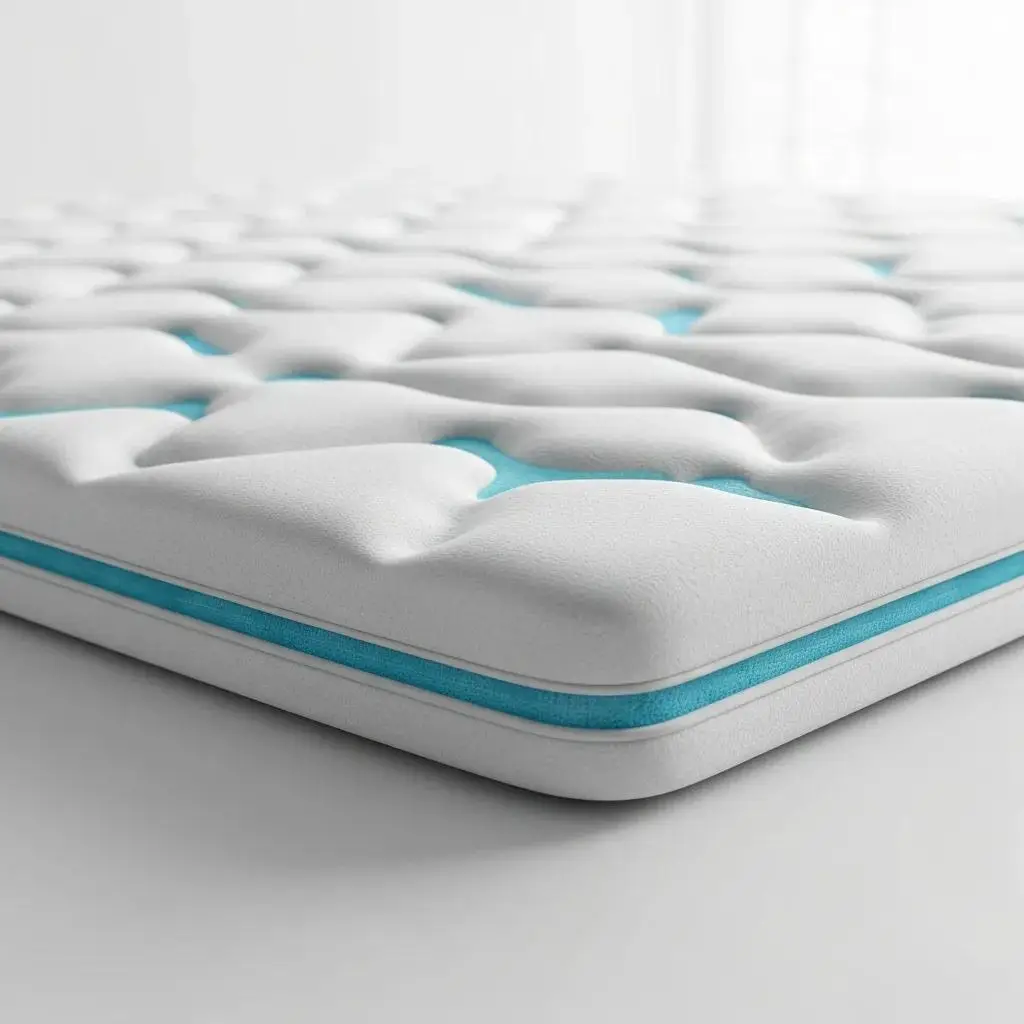
Older generations of memory foam were dense and slow to transmit heat, which seeded the belief that memory foam always sleeps hot; however, modern designs use several cooling strategies that mitigate thermal retention and improve sleep continuity. Key cooling technologies include gel infusion, open-cell foam, phase-change materials, breathable knit covers, and internal airflow channels; each reduces retained heat through enhanced thermal conductivity or increased convective airflow. Practically, cooling layers can shorten sleep onset time and reduce night wakings tied to thermal discomfort, so buyers should evaluate specific cooling features rather than dismiss memory foam entirely. Recent product testing and thermodynamic analyses in 2024 show measurable improvements in surface temperature behavior when multiple cooling strategies are combined.
How Do Cooling Technologies in Memory Foam Mattresses Work?
Cooling technologies work through three basic mechanisms: conduction (moving heat away), convection (allowing air to carry heat away), and thermal buffering (stabilizing temperature). Gel-infused foams increase thermal conductivity so heat disperses faster; open-cell foams and channels improve internal airflow; phase-change materials absorb or release heat to stabilize surface temperature. Each approach has trade-offs: gel infusion helps short-term heat transfer but may not create airflow, whereas breathable covers and channeling provide sustained cooling at the cost of slightly different feel. Combining layers—e.g., a phase-change top, open-cell comfort foam, and a ventilated support core—yields the most consistent cooling performance.
| Cooling Technology | How it works | Benefit / Drawback |
|---|---|---|
| Gel infusion | Conducts heat away from body into foam matrix | Speeds surface cooling; limited airflow benefit |
| Open-cell foam | Increased internal porosity allows air movement | Better convective cooling; may alter resilience |
| Breathable covers | Wicking fabrics + knit structure promote airflow | Improves surface cooling; needs durable fabric |
| Phase-change materials | Absorb/release heat at set temps | Stabilizes temperature; finite heat capacity |
This table helps you compare approaches so you can prioritize the combination of conduction and airflow in your purchase.
For shoppers looking to resolve heat concerns, the next step is to weigh cooling features alongside comfort and support in a trial period to validate both temperature and sleep-quality improvements.
(Integration note) If you intend to move from research to purchase, a vendor-neutral buying path focused on cooling-feature descriptions and trial options will help you identify mattresses that match your thermoregulation needs without overspending. The recommended approach is to compare product spec sheets for explicit cooling layers and to prioritize models that list multiple complementary technologies.
How Long Do Mattresses Really Last? Facts About Mattress Lifespan and Durability
Most mattresses last between roughly 7 and 10 years, but lifespan varies considerably by material, construction quality, and usage patterns—high-density foams and natural latex tend to outlast low-density foams and basic innersprings. Key durability factors include foam density, coil gauge and count, cover durability, humidity exposure, and care habits such as use of a protector or rotation. Observing clear replacement signals—visible sag, springs that pop, persistent new aches, or worsening allergies—helps avoid continuing on a compromised surface that undermines sleep quality. Proper maintenance like using a protector and following manufacturer rotation guidelines can extend useful life and preserve support.
What Factors Affect Mattress Lifespan Across Different Materials?
Material properties and construction dictate longevity: higher-density polyurethane foams resist permanent deformation longer, natural latex is resilient and durable, and well-engineered coil systems maintain support when coil gauge and zoning are optimized. Environmental factors—moisture, pet damage, and heavy soiling—accelerate wear, while body weight and frequency of use determine mechanical stress. Simple maintenance steps such as a breathable protector and regular inspection reduce premature breakdown. Understanding these determinants lets buyers prioritize long-lasting materials when durability is a primary requirement.
| Mattress Type | Average Lifespan | Durability Factors |
|---|---|---|
| Innerspring | 6–8 years | Coil gauge, edge support, padding |
| Memory foam | 7–10 years | Foam density, layer thickness, heat exposure |
| Hybrid | 7–10 years | Coil quality plus foam densities |
| Latex | 10–15 years | Natural latex quality, talalay/dunlop processing |
| Specialty (zoned/air) | 8–12 years | Mechanism complexity, replaceable parts |
This comparison highlights how material choice and construction affect longevity and helps pinpoint which options suit long-term value.
Research into mattress biomechanics emphasizes the importance of design and material science in preventing sleep-related musculoskeletal issues.
Biomechanical Review of Mattress Design and Spinal Alignment Sleeping mattress parameters significantly influence sleeping comfort and health, as reflected by the extensive investigations of sleeping support biomechanics to prevent sleep-related musculoskeletal problems. Herein, we review the current trends, research methodologies, and determinants of mattress biomechanics research, summarizing evidence published since 2008. In particular, we scrutinize 18 articles dealing with the development of new designs, recommendation criteria, instruments/methods of spine alignment evaluation, and comparative evaluation of different designs. The review demonstrated that mattress designs have strived for customization, regional features, and real-time active control to adapt to the biomechanical features of different body builds and postures. However, the suggested threshold or target values for desirable spine alignment and body pressure distribution during sleep cannot yet be justified in view of the lack of sufficient evidence.
When and Why Should You Replace Your Mattress?
Replace a mattress when objective and subjective signals converge: visible sag greater than 1–1.5 inches, springs protruding or noise, new chronic morning pain, or allergy escalation indicate material failure or compromised hygiene. Replacement timing also aligns with declining sleep quality despite other interventions, signaling that the sleep surface is the likely cause.
Before replacing, check warranty and trial options to see if the mattress qualifies for remediation; planning purchases during promotional periods can reduce replacement cost burdens. Acting on clear signs preserves health and avoids years of poor restorative sleep.
(Integration note) When shopping for durable replacements, prioritize sellers that clearly publish material specs, trial periods, and warranty coverage so you can assess long-term value and minimize risk in the buying process. A transparent trial and warranty policy is often as important as stated lifespan estimates.
Is an Expensive Mattress Always Better? Price vs. Quality Explained
An expensive mattress is not always inherently better; price often reflects materials, manufacturing quality, and brand positioning, but high cost does not guarantee optimal construction for your body or sleep needs. Features that commonly justify higher prices include high-density foams, natural latex, zoned support systems, premium covers, and generous trial/warranty terms because they increase durability, targeted support, and long-term comfort. Evaluating value requires reading material lists, assessing independent reviews, and confirming trial and warranty conditions rather than relying on brand prestige or MSRP alone. A focused purchasing checklist streamlines finding the best-value mattress for your priorities.
What Mattress Features Justify Higher Prices?
Higher prices typically correspond to costly raw materials and complex engineering that enhance performance and longevity, such as natural latex, high-density supportive foams, zoned coil systems, and advanced cooling top layers. Natural or organic covers and reinforced edge support also add manufacturing cost while improving durability and daily usability. These features translate into measurable benefits: longer lifespan, better targeted spinal support, reduced motion transfer, and improved temperature regulation. Prioritize features that map to your primary needs—durability, cooling, or pressure relief—rather than assuming price alone signals fit.
The forces of gravity can deform soft tissues during sleep, highlighting the need for mattresses that provide adequate lumbar support to maintain spinal alignment.
Lumbar Support in Mattresses for Back Pain Relief For many patients with chronic low back pain, the lack of sleep and sufficient rest period that allows some relaxation is a major obstacle to a good quality of life. During sleep periods, neuromuscular activity is at a minimal level. The major factor influencing the forces on the body, and particularly the spine, is gravity. The force of gravity is sufficient to deform soft tissues when the body is resting on a mattress. Thus, the goal of this study is to measure the contact pressure forces acting on the spine with and without an inflatable support in various experimental conditions. Our hypothesis is that a lumbar support will distribute the force of gravity more uniformly over the pelvic, lumbar and thoracic areas, maintaining the lumbar lordosis, in a supine posture.
- Natural latex and high-density foam: provides durability and responsiveness.
- Zoned coils or support cores: targeted lumbar support and alignment.
- Premium covers and edge support: improve longevity and usable sleeping area.
How to Find the Best Value Mattress for Your Sleep Needs?
Finding value requires a checklist-driven approach that emphasizes materials, trial length, warranty fairness, and third-party reviews over brand image or sticker price. First, compare material specifications (foam density, coil gauge, latex origin), then verify trial and warranty terms to reduce purchase risk. Next, read independent tests and user feedback focused on durability and cooling performance for your sleep position. Finally, use trial periods actively—test your mattress across several weeks to evaluate comfort, support, and thermal behavior before confirming the purchase.
Checklist for value-driven purchase:
- Confirm material specs and densities in writing.
- Verify trial length and clear return policy.
- Check warranty coverage for sag and defects.
- Review independent performance tests and reviews.
(Integration note) To convert these steps into action, look for vendors that present clear material breakdowns, transparent trial and warranty language, and unbiased testing summaries so you can compare real value across options without relying on price alone.
Conclusion
Understanding mattress myths empowers consumers to make informed choices that enhance sleep quality and overall well-being. By debunking misconceptions about firmness, cooling technologies, and lifespan, shoppers can prioritize features that truly matter for their unique needs. Take the next step towards better sleep by exploring our curated selection of mattresses designed for comfort and support. Invest in your rest today and experience the difference a well-chosen mattress can make.